Hydribbit
Introduction
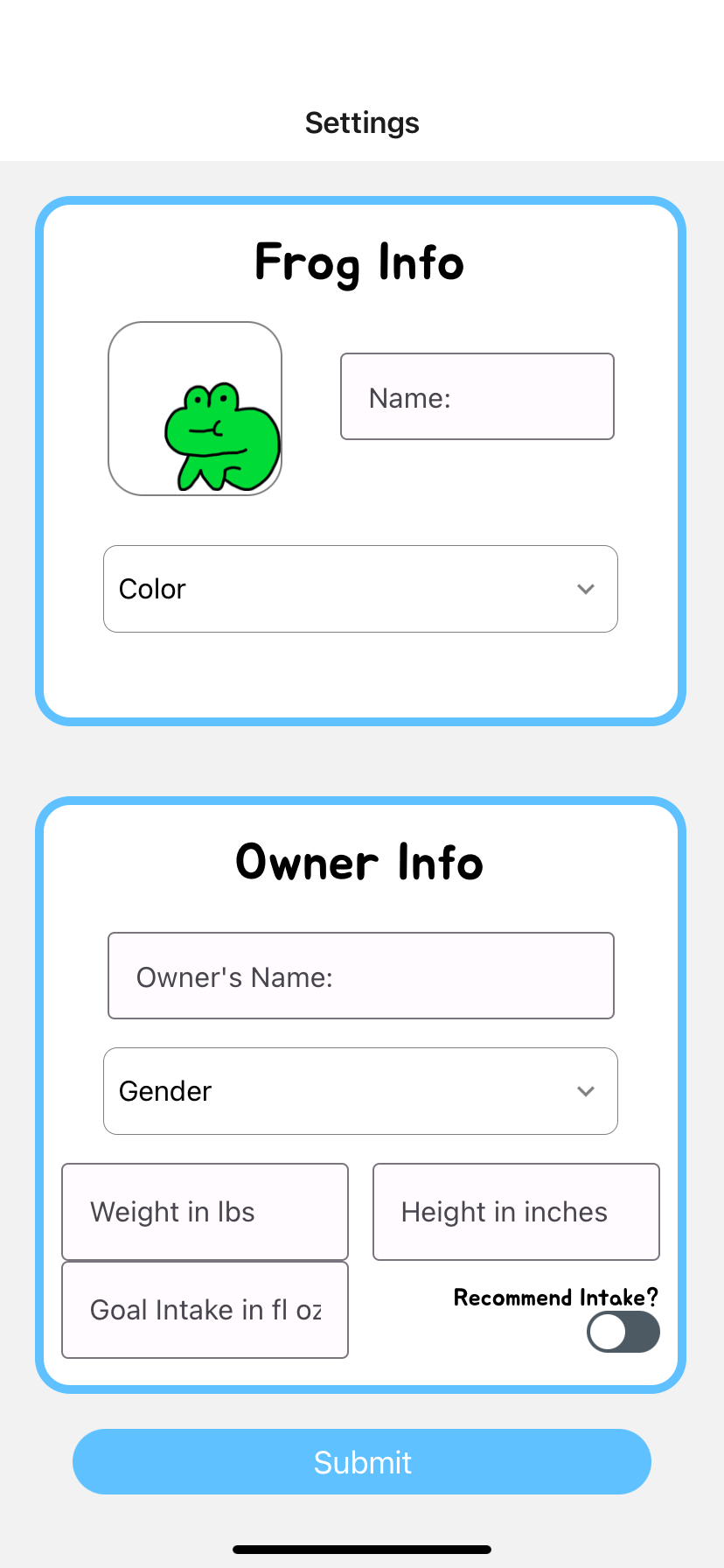
Hydribbit is a Tamagotchi-inspired mobile app designed to address the common struggle of staying hydrated by combining water tracking with engaging user interaction. Unlike traditional hydration apps, Hydribbit introduces a virtual frog companion whose well-being depends on the user’s hydration habits, fostering a sense of responsibility and motivation. Users can customize their hydration goals, log water intake through a simple interface, and track progress with insightful graphs. The app gamifies hydration with mini-games and achievements, allowing users to earn coins to personalize their frog’s accessories and backgrounds. Targeted at health-conscious adults aged 18–35, Hydribbit transforms tracking water intake into a fun and rewarding experience, promoting better hydration habits in a creative, interactive way.
The Code
Hydribbit was built with the following tools:
- React Native for mobile development
- Expo for development build testing
- SQLite for on device storage Personally I built most of the features including, but not limited to:
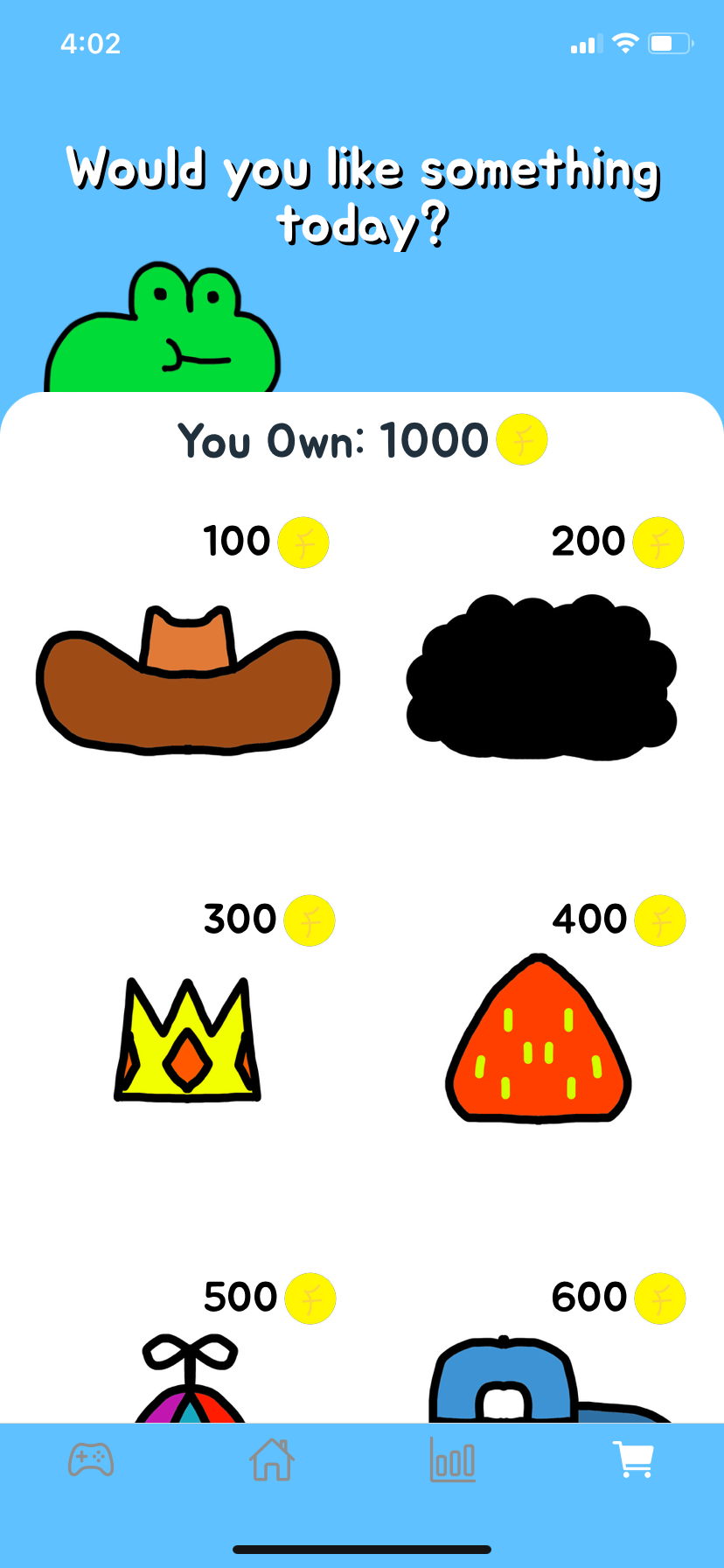
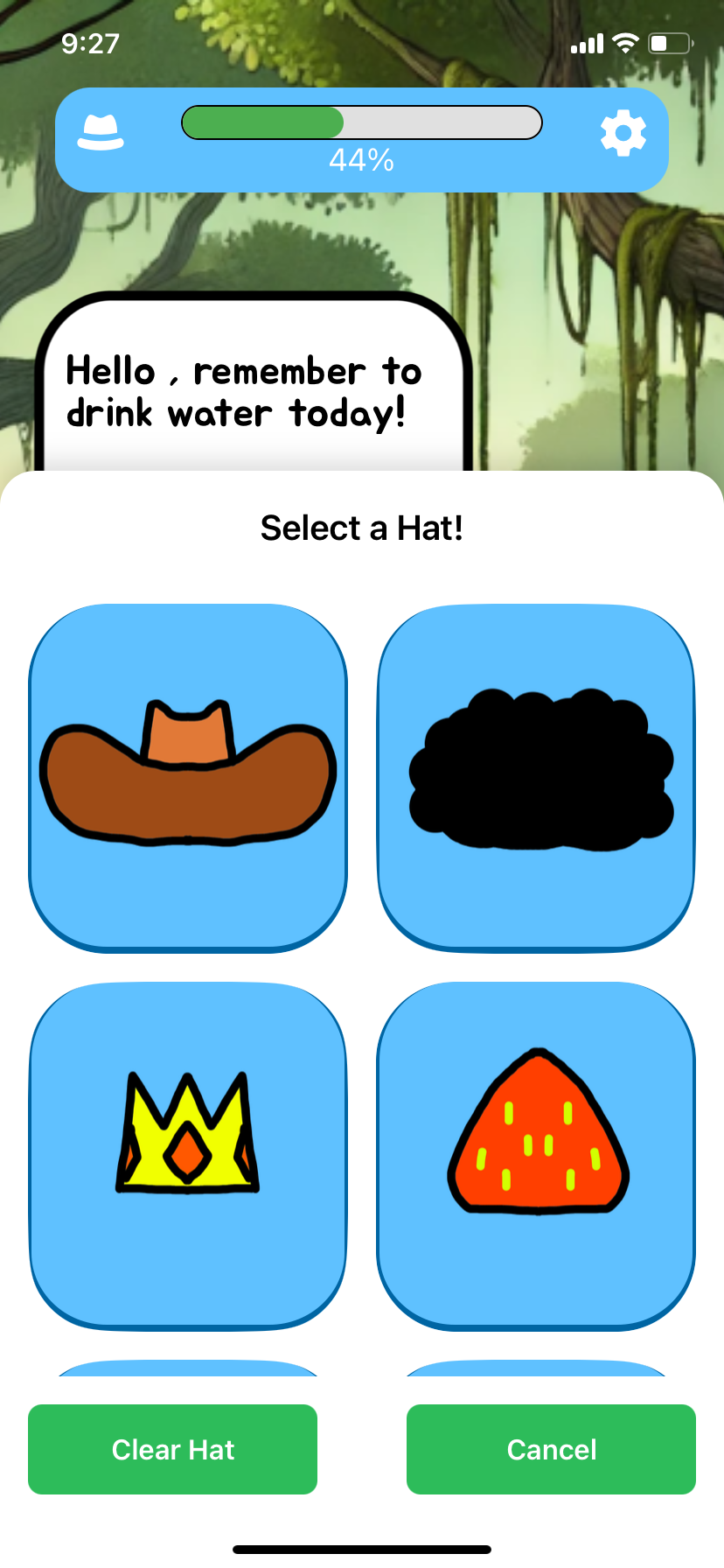
- The shop for purchasing and equipping hats
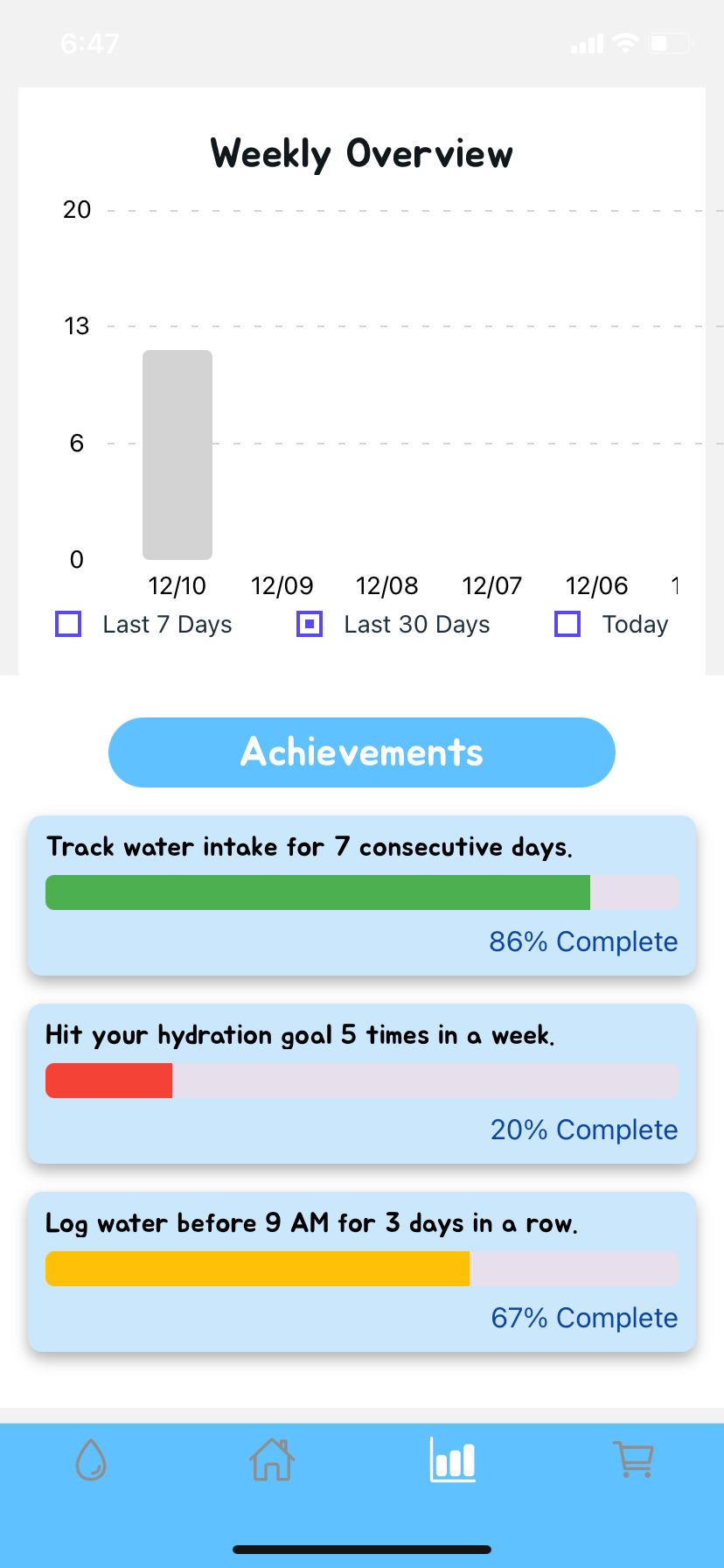
- Achievements and achievement status
- Charts for tracking water consumption
- Adding and drinking “water bottles” (preset amounts that a user could create for quicker access)
- Sound effects and other UX elements
- Adding water to a daily total
Field Study
To evaluate Hydribbit, a three-day field study was conducted with four participants fitting the app’s target demographic, including health-conscious individuals, gamers, and busy college students. Participants were introduced to the app’s features and asked to set hydration goals, log water intake, review progress through graphs, and engage with gamified elements, such as earning coins to customize their virtual frogs. Quantitative data, like water logging frequency, and qualitative feedback from journals and questionnaires, were collected. Results showed consistent engagement, with customization features and frog care incentivizing usage. Gamification motivated some participants to drink more water, while others found the mini-game elements less engaging over time. All participants reported the app was easy to use, and most appreciated its aesthetics, though one felt it was too childish. The study demonstrated Hydribbit’s potential to promote hydration habits, especially through its unique combination of tracking and gamification.
Reflection
The biggest challenge for Hydribbit was ensuring user engagement, as every interaction needed to encourage users to return to the app. Initially, the team believed that adding a Tamagotchi gamification to a standard hydration tracker would be enough, but it became clear that each element required thoughtful design. While users enjoyed the gamified aspects, leading to efforts to incorporate more fun content, this focus came with trade-offs. Some game elements deviated from the app’s goal of motivating users to drink water, and water intake recommendations lacked accuracy without scientific backing. Despite these shortcomings, Hydribbit demonstrated the potential of combining utility and entertainment, suggesting future iterations should integrate the two even more closely. Balancing its dual identity as both a game and a water tracker proved challenging, highlighting the importance of an app having a clear identity that shapes its design and user interactions. Ultimately, Hydribbit showcased the value of thoughtful interaction design and provided insights for future improvements.
Some Pictures